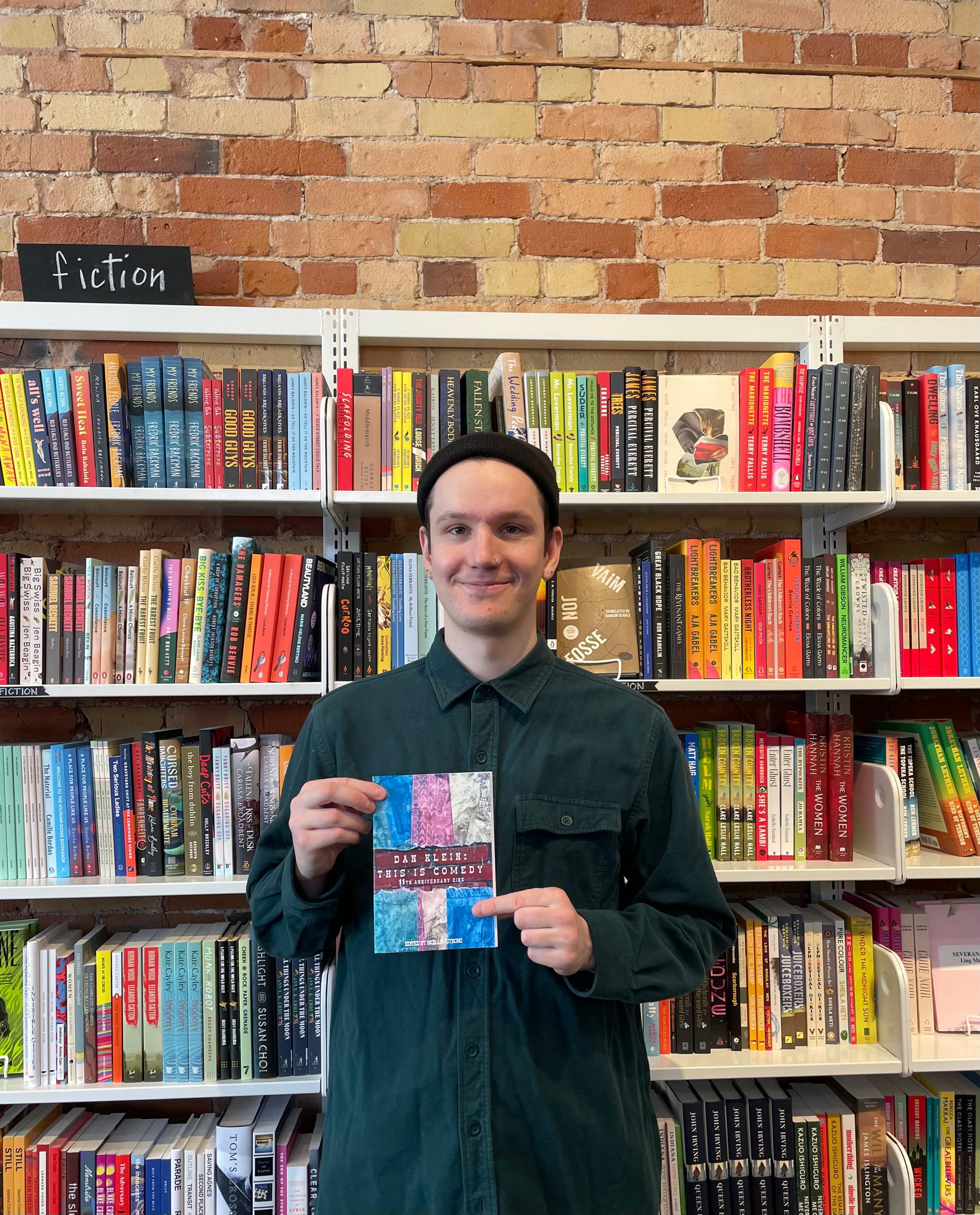
Maker's Mark: Nick Armstrong
Friend of The Juncture, Nick, talks film programming, Jerry Lewis, and social performance

Welcome to Maker’s Mark, where The Juncture talks to local makers and artists about their work and their communities. Nick is on the programming team for the documentary screening series, Truth and Dare which highlights cutting-edge documentaries that challenge the idea of what a doc needs to be. I went to their most recent screening, Dan Klein: This Is Comedy, which is a caricature of the hour-long stand-up set. It’s just Klein delivering unfunny non-joke after unfunny non-joke, to which the audience explodes laughing. It’s a punishing, fascinating, surreal spectacle and seems a skeleton-key to Nick’s filmic philosophy. So now, I thought to myself, seems the right time to find out more about him.
— Max
Max: Describe your different roles and what you’re doing in film right now in Toronto.
Nick: I work at Hot Docs and at The Revue. And I co-program Truth and Dare which is currently based at Hot Docs, though we’re extending it to other venues, too. It’s been really inspiring to build an audience through the series. It’s the most I’ve felt connected to film and film people in Toronto. Doing this alongside my co-programmers, Adam Bovoletis and Sacha Kingston-Wayne, who both have a lot of connections and who are very creative people in their own right, has allowed me to meet a lot of people who are making DIY stuff, some of whom have even expressed interest in us screening their work. Seeing people make films in different ways and on different scales has inspired me in my pursuit of my own creative goals. I’ve worked on film sets which had its ups and downs. It was not super sustainable financially and beyond that, it was pretty stressful. Working on film sets, you see these massive structures and crews, you see how much money it costs. I felt dissuaded from giving so much of my time to make something. I do know anything worthwhile will take time and effort but I don’t think it has to be so taxing on your well-being. I’d like to make films and now I have seen many more realistic examples.
M: When you’re programming for Truth and Dare, how do you toe the line between showing something idiosyncratic while not being exclusionary?
N: It’s kind of a risk reward situation. I think the most rewarding things are the most idiosyncratic films, seeing people react, good or bad, to them. But if you can get away with programming something more idiosyncratic, that’s what I’m drawn to, in terms of what I would go out to see, something that you wouldn’t be able to see otherwise, or isn’t going to be played otherwise. So that’s usually my preference. We’ve had screenings that people came out for and they have no idea what it was. It’s less like a safe outing. It’s nice for people to tell you, I had no idea what this was going to be, but it was so interesting, or I loved it. The Dan Klein: This Is Comedy screening felt that way to me. It was only ever released on YouTube. I honestly didn’t know anyone that had seen it, but it was something that has lived in my brain for a long while. When I announced it, friends and friends-of-friends began to tell me they have seen it, too, and that they love it. And then there were other people who had no idea what they were getting into. I feel like it was really made for that setting, to live in the discomfort and to see what people laugh at and stuff. So that was a really rewarding example.
M: It was sort of a captive experience.
N: Captive is a good word, yeah. I was nervous about showing it because, well, people can get tired out. I’m already sensitive to that. If I’m screening something for friends, when I have to sit down and watch it with them, I’m overthinking, wondering how they’re responding to it.
But in my role as a programmer it’s different because there’s money involved as people have chosen to buy tickets. They didn’t have to. I would hope that when people attend a Truth or Dare screening that they will be honest about if they like something or not. That’s always interesting to me. In another way, it feels like more pressure. This is money time. These people are traveling to the theater and you hope people will want to come back again because they’re getting an idea of the types of things we’re showing with our series, which is ongoing and growing.

M: For the Dan Klein: This Is Comedy screening, you did a printed zine, which, among other things, includes an interview with the filmmaker and an essay. That’s on top of the introduction at the event itself and the event promotion and logistics. What kind of endurance do you need to present all those pieces?
N: I’d wanted to screen Dan Klein: This Is Comedy for a really long time. I did that interview with him three years ago and I wasn’t really sure what was going to come of it. There was no screening series or zine back then so I was like, What am I going to do with this?
It’s been really encouraging to program Truth and Dare with a couple of friends. That has really helped with endurance. We encourage each other. There’s also a sharing of commitment. Some screenings are more important to one of us and become our respective babies. Me, Adam, and Sacha all worked at Hot Docs in concessions. The screening series was just born from chatting on shift. We would see the kind of things that Hot Docs was programming. Some of it worked and some of it didn’t, but in general, it was kind of all for a certain audience. We all thought Hot Docs is such a good space for bringing in so many different people. Young crowds, like our friends or peers, were not coming out. I wouldn’t say that the three of us are primarily interested in documentary but the theatre has a documentary mandate so we work within that. It’s been a surprisingly good challenge to find things that fit the mandate yet challenge the documentary form.
M: What are the qualities of the films that you’ve found yourself drawn to?
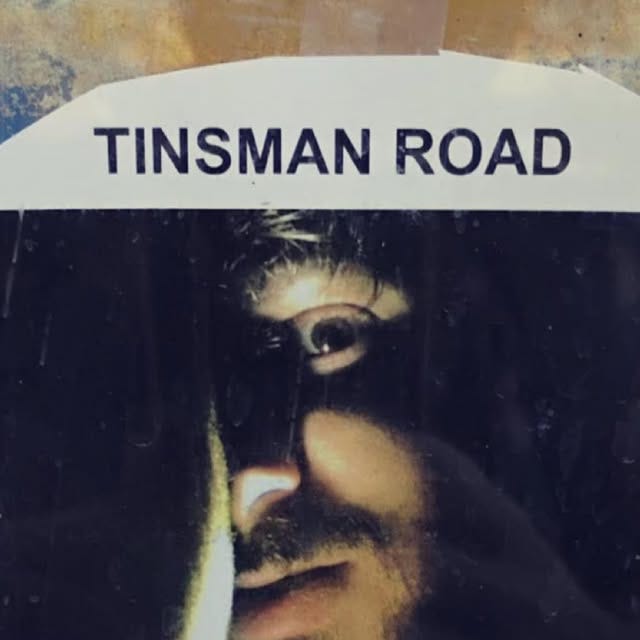
N: People often think of documentaries as instructional or informative. We get outside of the box and often program something that’s kind of manipulating reality. I’ve started to even look at a type of movie that is explicitly non-documentary, but looks like a document. Like Tinsman Road directed by Robbie Banfitch, which was not a documentary at all, but was found footage horror which plays on something that resembles documentary. It is a somber, low budget story about this guy whose sister had gone missing. The protagonist returns to his hometown in New Jersey to explore that mystery and make a movie of his experiences.
I’m pretty drawn to anything that invites your attention to its own construction, especially in terms of its own genre. It might have started when I first watched Scream. The first time I watched it, I was about 8-years-old and I ended up watching it four times in a row. I downloaded it onto some kind of device somehow. I watched it on a plane to Switzerland and I was blown away. And then when we got to the hotel room, I did it again. I remember the intensity of it and the fun and fear of it. To this day, Matthew Lillard in that movie is one of my favorite performances. I’ve always loved Wes Craven so I went on to explore his stuff more after that. And that 90s teen horror genre was always interesting to me because of its self-referential quality.
Billy Madison was also one of my most formative things. As a kid, you often just take that kind of work to heart. I love movies that present a world that matches these characters’ askew viewpoint and worldview. And that extends to Dan Klein: This Is Comedy and to so many comedies and texts that interest me. I draw this lineage back to Jerry Lewis through to Eddie Murphy and Sandler. They make these comedy star vehicles, where the stars are making themselves so elastic and expansive that they’ve totally infected the worldview of the film to the point that you kind of can’t think about anything other than that person. Which can get demented.
M: How do you relate to TYPE Books Junction?
N: So my lovely partner, Jess, works here at the store and we live basically around the corner. She is a great inspiration in everything I do. So that’s more about her than this place. But it is great to have a neighborhood bookstore.
M: What are you reading right now?
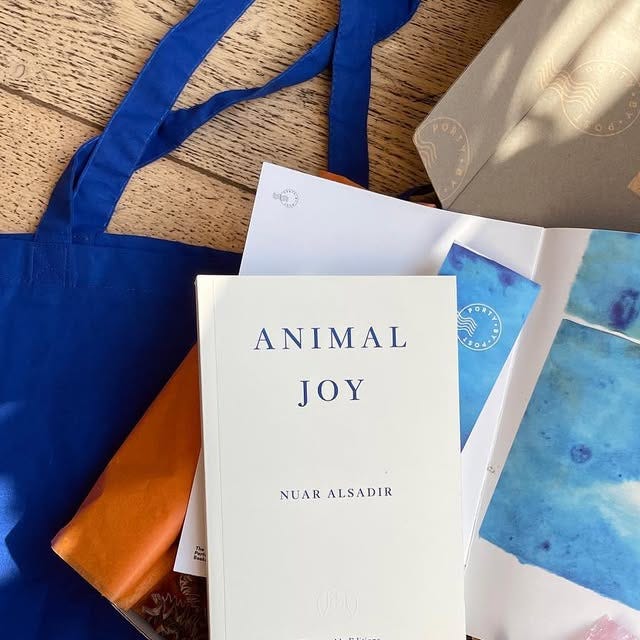
N: Right now I’m reading Animal Joy by Nuar Alsadir. I started reading it ahead of Dan Klein: This Is Comedy because I was really interested in a text about comedy and laughter. It’s such an amazing book. I’m not even that far into it, just 90 pages or so. I’m finding it so dense and I’ve tried to explain it to people and I have had trouble each time. I don’t even know where the book is going most of the time. Alsadir is kind of dismantling learned behaviors that pertain to laughter and the way that we move and carry ourselves in the world. The idea of comedy and wanting to make people laugh is so deeply tied into how we socialize in general. The book connects to the state of comedy because it exposes how unoriginal a lot of comedy is. How much it’s a contract and how a comedian can often be pandering and trying to get people to like them, to get specific reactions out of people. I think the great comedians have learned how to navigate the battle between, how do I be true to myself and also make people laugh. I think that’s also just kind of a daily ordinary life thing, too. The way you hold yourself socially, how much of that is performance so that you can get by? When I was younger, I was trying to figure out how I can get by without having to share too much of myself. As an adult, I’ve learned it’s better to be understood and to comfortably carry myself in the world instead of shaping myself to make other people comfortable.
M: Tell me about some of your favorite books about film.
N: I really like to read about film sets and about the making of films. I’m interested in the mythos of a person’s impact on a film or story, and how someone can loom so large over a particular film. There’s a book called The Man Who Heard Voices: Or, How M. Night Shyamalan Risked His Career on a Fairy Tale and Lost which is about the making of Lady in the Water. It was written at a time where M. Night Shyamalan was the next great thing but that movie was kind of a failure to a lot of viewers and critics. He burned bridges over how much he believed in it. That’s a great book. Another book I love is The Total Filmmaker by Jerry Lewis. He writes about working in every facet of film and he has this great understanding of how film works and how film sets work.
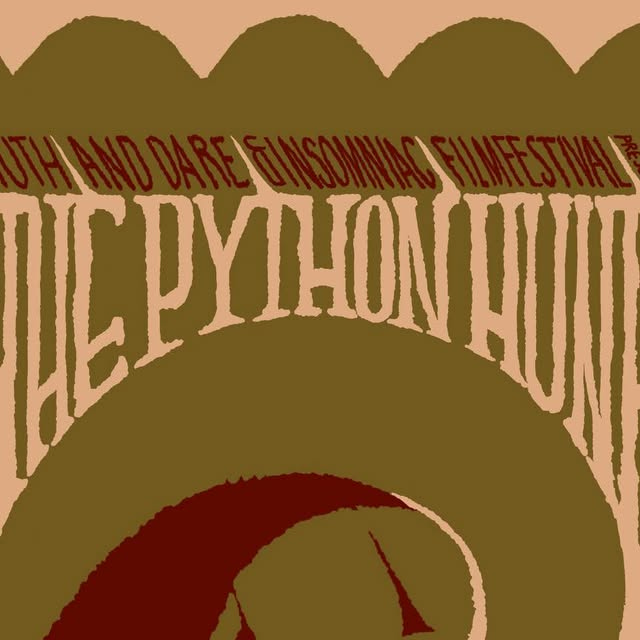
M: Tell me about the next Truth and Dare screening.
N: On Sunday February 1, we’re playing The Python Hunt at Hot Docs at 7pm. It’s a very lyrical and aesthetically interesting documentary about these people in Florida that participate in a state-commissioned competition to hunt and kill pythons. The government, through this competition, preyed on people who needed money to help get rid of these animals. It’s pretty sad and it’s really interesting. It’s an ensemble of characters who are doing it for different reasons. The film looks really great, sounds really great, and it’s somewhat more traditional than some of the other films we’ve shown. It’s less about snake-hunting as much as it is about what puts people in these positions to do things that they don’t even want to do.